
Project Overview
Move For Change
Role
UX Researcher / UI Designer
Platform
Responsive Web
Tools
Figma, Jira
Timeline
16 Weeks
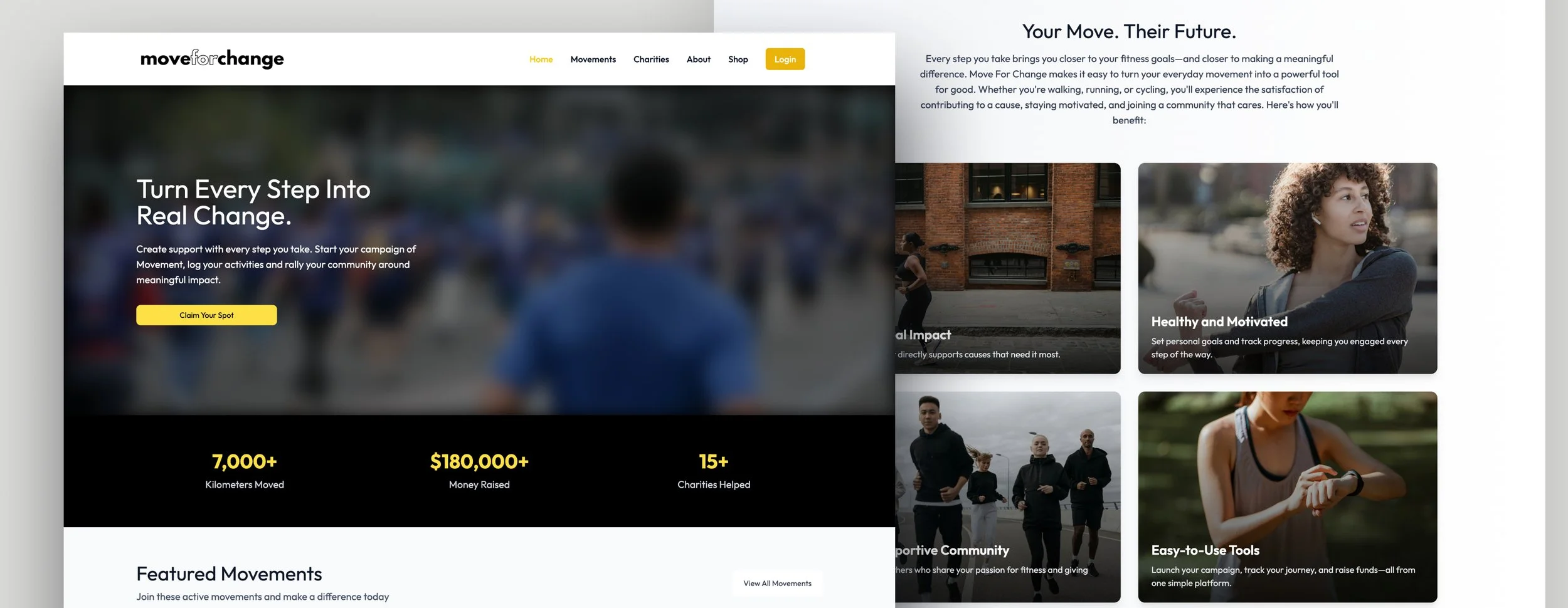
Move for Change began as a static landing page intended to introduce a charitable initiative. However, the experience created friction by requiring users to interpret the product before taking action. This redesign transforms the landing page into a unified platform—enabling users to sign up, donate, start a movement, and track activity in one seamless experience.
The Problem
The original experience lacked a clear path to action. Users were forced to navigate passively, interpret messaging, and search for ways to engage—resulting in drop-off before meaningful participation.
Key issues:
No clear primary action
Passive, content-heavy experience
Fragmented pathways to donate or participate
No support for ongoing engagement
Opportunity
Rather than optimizing a landing page, the opportunity was to redefine it as the product itself—transforming a static entry point into an active platform that supports participation, contribution, and continuous engagement.
Current Experience (Friction)
Lack of clarity around the purpose and mission
Difficult for users to understand how to take action
Key information buried or hard to find
Weak visual hierarchy
Experience felt more informational than engaging
Missed opportunities to connect with and motivate users
Friction Point (Hero)
Value proposition buried → long paragraph, low scannability
Primary CTA unclear → subscribe ≠ core goal (move/donate)
Low contrast readability → grey text on dark image
No immediate action path → no “Start Movement” / “Donate” above the fold
Friction Point (Create Your Own Movement)
Cognitive overload → too much text + multiple competing visuals
No hierarchy → all features feel equal importance
No actionable CTA → still no way to start
Mental model unclear → movement? tracking? donating? unclear flow
Friction Point (Social Proof + Impact Section)
Too late in journey → trust comes after confusion
No conversion bridge → doesn’t lead to action
Competes with prior confusion instead of resolving it
Product Vision
The plan is to evolve from a marketing surface into a multi-sided platform that supports different user roles—donors, movement creators, and participants—while enabling real-world impact through activity-based contributions.
Core pillars:
Immediate action (donate, start, join)
Ongoing engagement (activity tracking)
Community-driven impact
User Interviews / Insights
The platform supports donors, movement creators, and participants—each with different goals, from giving quickly to launching causes or contributing through activity (e.g., Strava). Through 1:1 interviews with donation-platform users, I identified key friction around clarity, trust, and ease of action, shaping a redesign that balances simplicity with the flexibility this ecosystem requires.
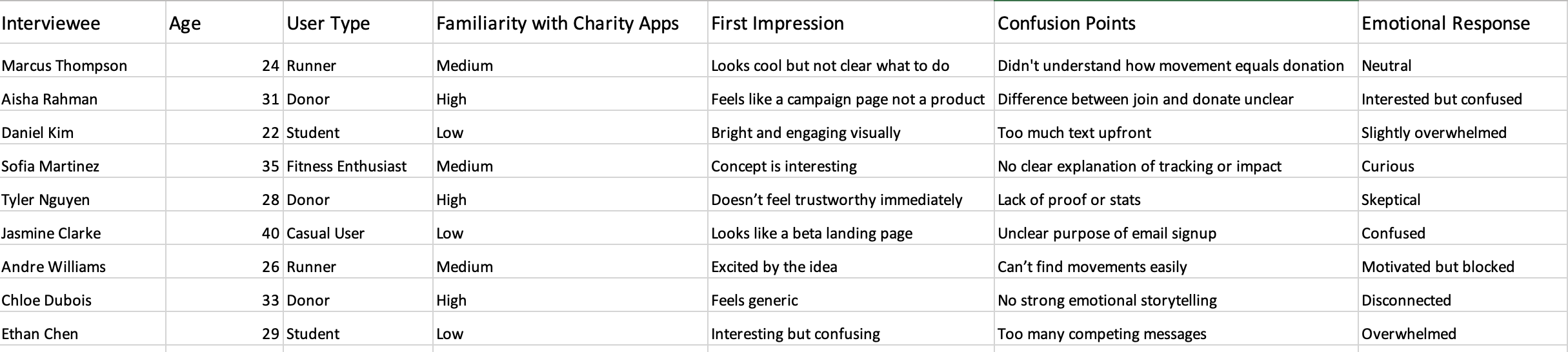
I grouped user interview insights into key themes like clarity, action, and trust to identify major friction points. These prioritized clusters directly informed the design decisions behind the redesigned Move For Change experience.
Persona Generation
I created the persona by synthesizing key patterns from user research, capturing shared goals, motivations, and pain points. This ensured our design decisions stayed grounded in real user needs throughout the Move For Change redesign.
Design Principles
The redesign will be guided by primary user data and principles focused on reducing friction and driving meaningful engagement:
Action-first — prioritize doing over browsing
Clarity over interpretation — remove ambiguity
Guide, don’t force — structured but flexible pathways
Design for momentum — encourage repeat interaction
Improved Experience (Task Flow)
The landing experience was reimagined as a centralized hub where users can immediately choose how they want to engage—whether donating, starting a movement, or participating through activity.
Key shifts:
Passive → action-driven entry
Single-purpose → multi-functional platform
One-time visit → ongoing engagement loop
New IA Strategy
From our Persona insights, I identified four core experience gaps—clarity, motivation, action, and trust. This helped restructured the landing page to follow a conversion-first narrative flow:
Hook (Above the Fold)
Clear value proposition + primary CTAHow It Works
Simplified 3-step explanationFeatured Movements
Immediate opportunity to engageImpact & Social Proof
Stats, testimonials, real outcomesDeep Dive Content (Optional)
For users needing more validationPersistent CTAs
Repeated entry points to convert
Wireframes
I introduced a clear CTA hierarchy (“Start a Movement” vs “Fund a Movement”), designed movement cards to feel tangible and actionable, reduced cognitive load through progressive disclosure, structured content for scroll-based storytelling, and prioritized mobile-first readability and scanning.
What didn’t work
Usability testing showed that while the experience looked cohesive, users struggled to take action.
Unclear primary action — Users couldn’t quickly tell whether to donate, join, or create a movement
Weak CTA hierarchy — Competing actions (like subscribe) diluted focus
Low scannability — Long, inspirational copy slowed users and hid key information
Unclear movement mechanics — Users didn’t fully grasp how participation translated to impact
These captured insights helped shape how I clarified actions, simplified content, and make movements more tangible and actionable for users to create, join or donate to.
Design System & Developer Collab
Partnered closely with engineering to build a scalable design system aligned to Tailwind CSS, translating colour, type, spacing, and components into reusable, production-ready patterns—ensuring consistency across devices and flexibility for future growth.
Improved Landing Page
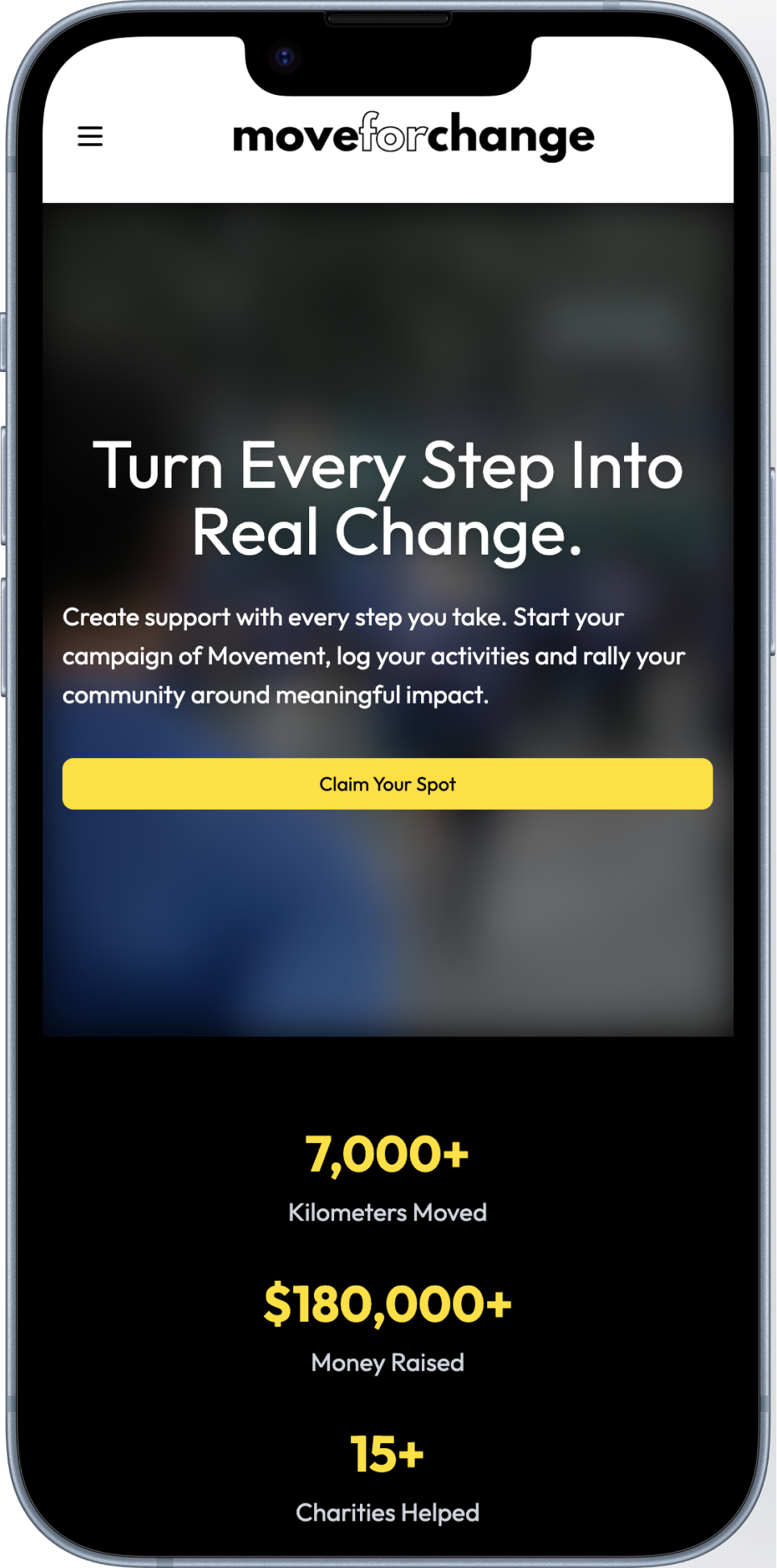
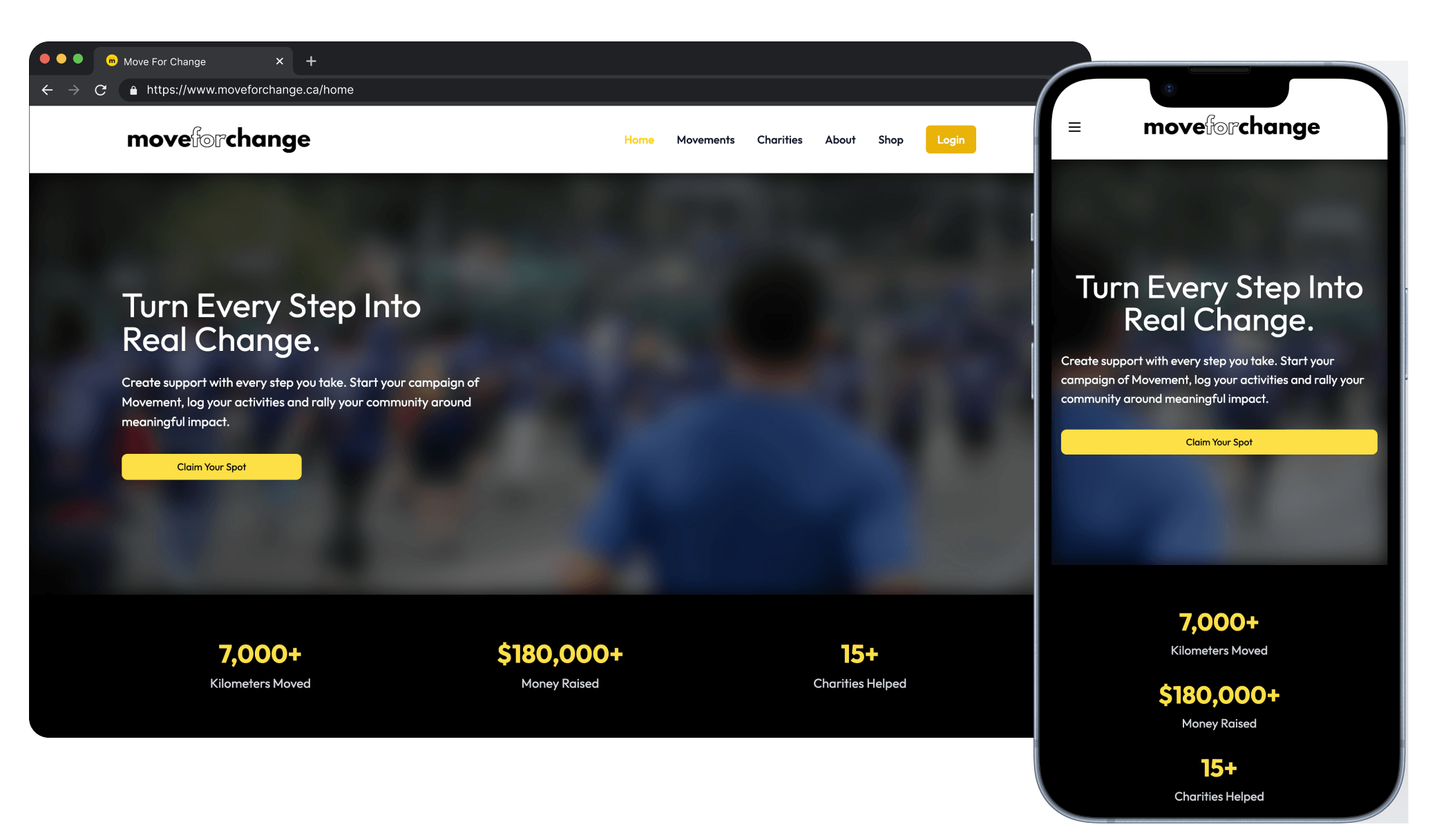
The landing page was redesigned to prioritize clarity and immediate action, aligning with user needs for quick engagement and supporting conversion goals. By surfacing key actions upfront, it reduces friction and shifts the experience from passive browsing to purposeful interaction.
Movements Detail Page
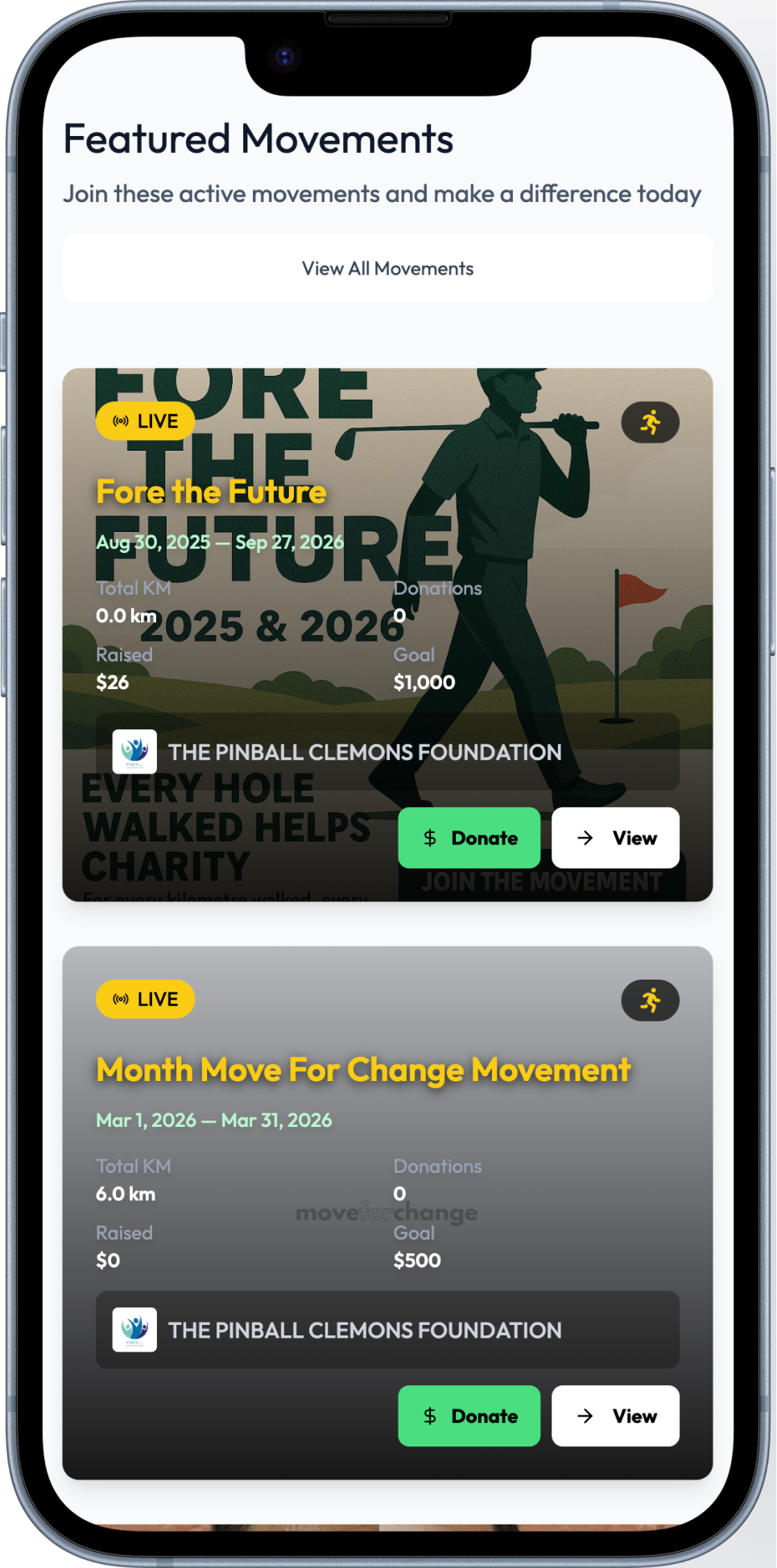
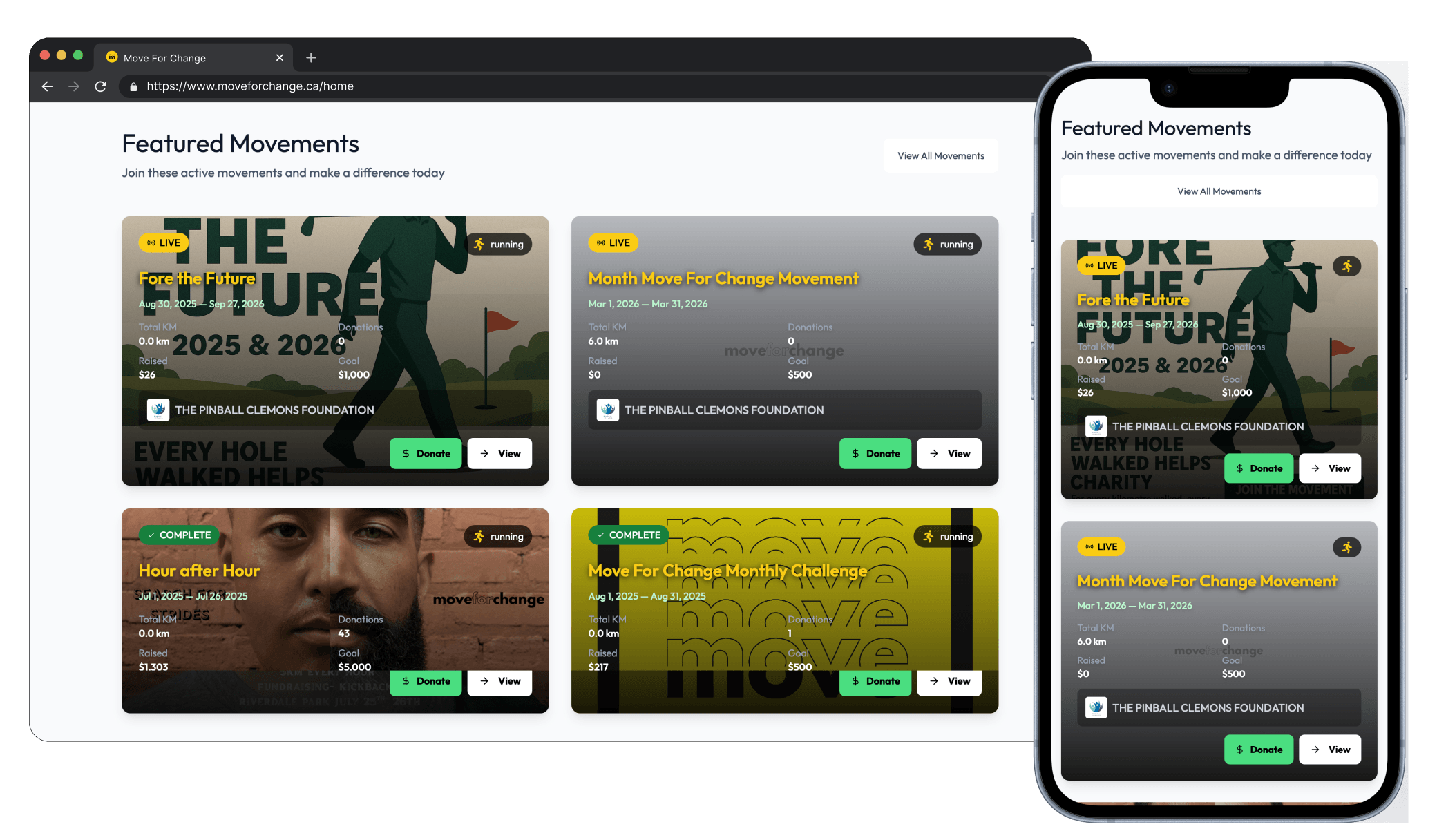
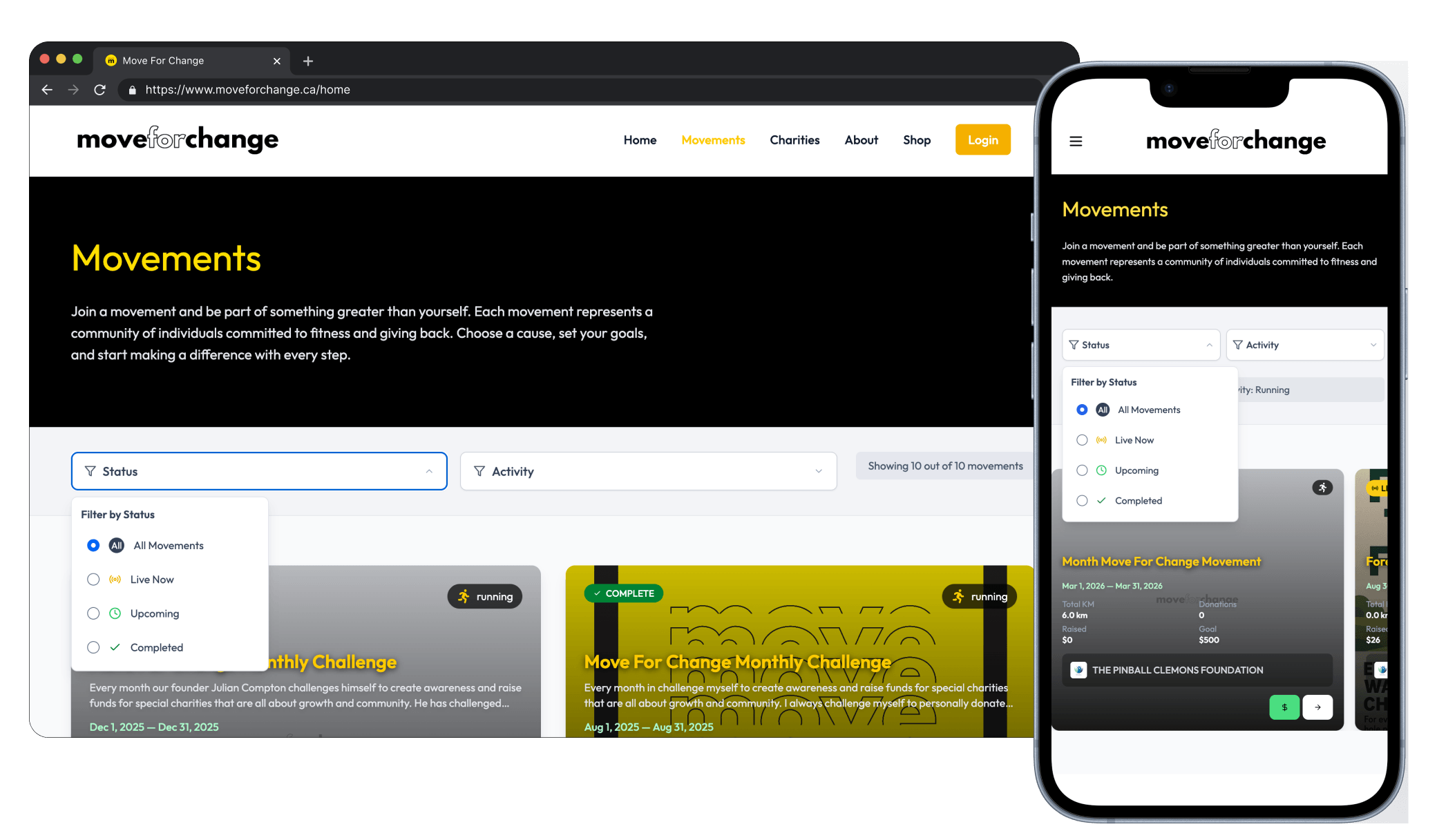
The movements page was designed as a central hub where users can explore active movements and seamlessly create their own. By combining discovery and action in one place, it aligns with user needs for clarity and ease of participation while supporting growth and engagement goals. Surfacing movements alongside a clear entry point to create one reduces friction and encourages both contribution and ownership
Donate To A Movement
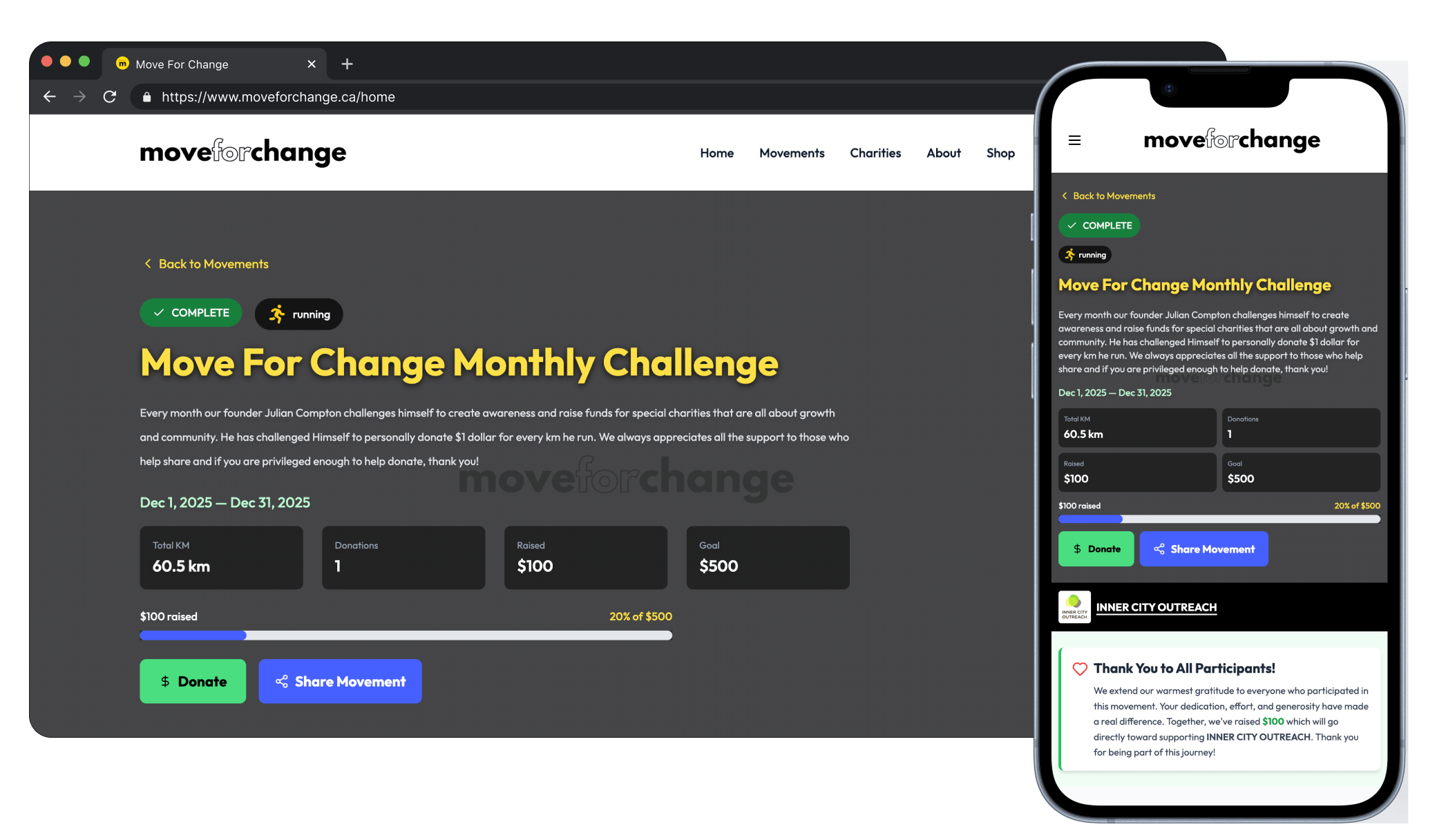
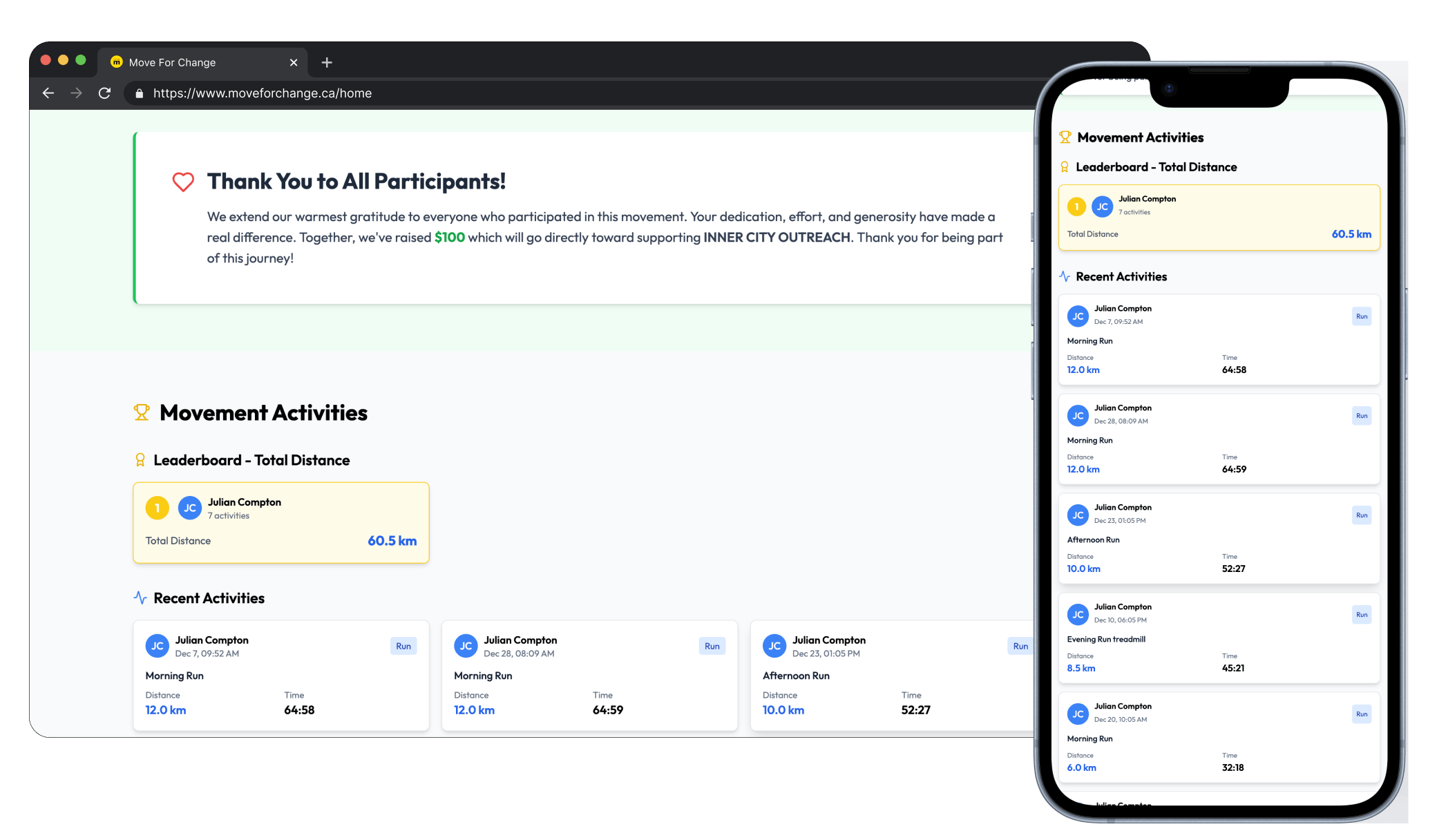
This flow was introduced to better align with user expectations for quick, purposeful giving while supporting our goal of increasing participation. By surfacing active movements and enabling low-friction contributions, it allows users to take immediate action. Clearly linking donations to real-world impact reinforces trust and purpose—driving higher conversion and encouraging repeat engagement through meaningful participation.
Create A Movement
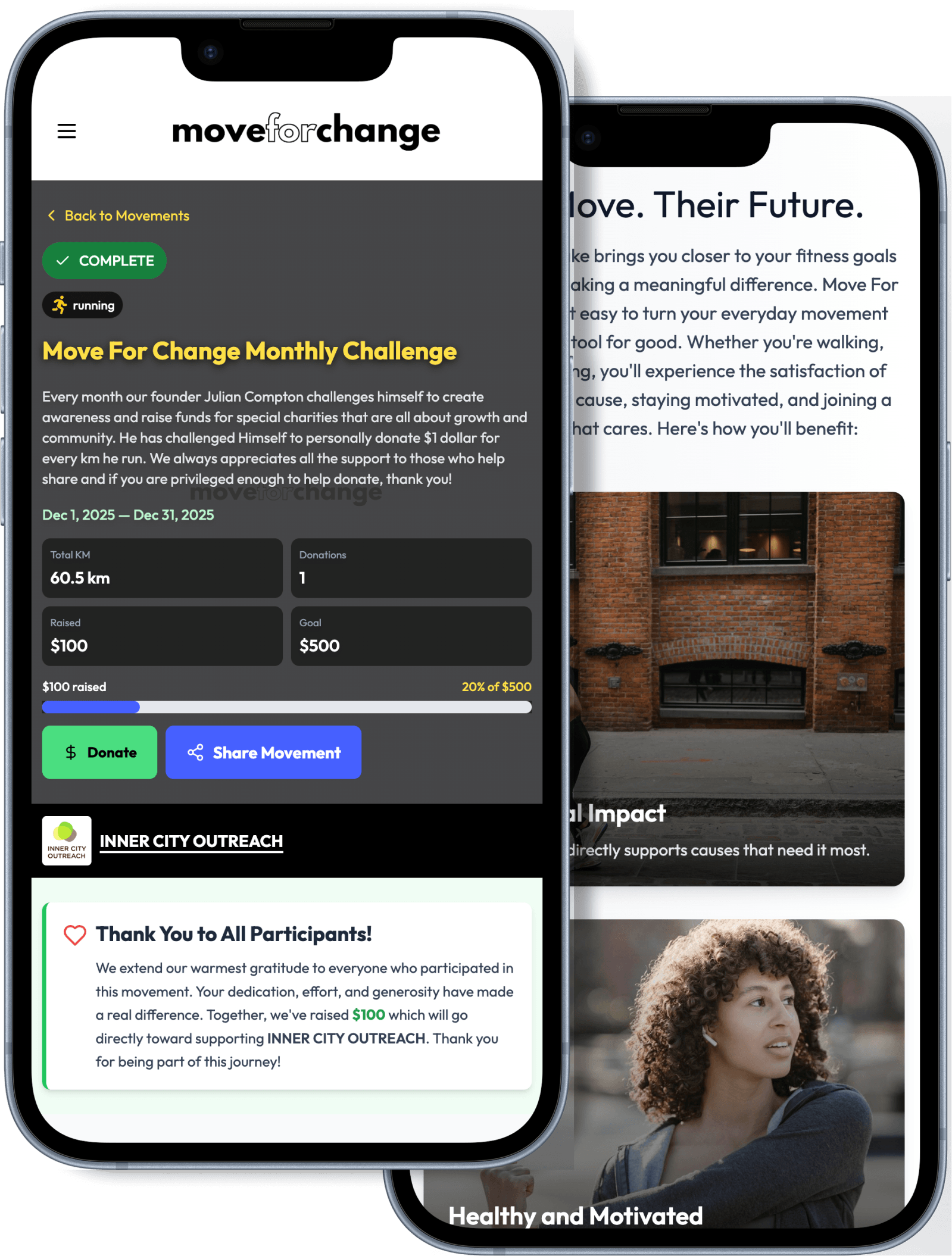
This flow was introduced to align with users’ desire to contribute beyond one-time donations while supporting growth through community-driven engagement. By enabling users to easily launch their own movements, it shifts participation from passive to active—driving deeper involvement, repeat use, and scalable impact.
Impact Results
25%+
Increase in user engagement within the first year
$180k
Raised for all supporting charities
15+
Charities helped within the first year
Future thinking / Next Steps
AI-powered personalization
VR/AR integration - Boost user retention by 30%
Advanced wearable technology - 40% increase in data-driven insights
Social feature evolution - 50% growth in active users, fostering community engagement
View More Recent Projects
M&S
UX Compass
Cashmere